Animals at the Farm
Animals play an important part in our thriving farm ecosystem. These include:
Bees: we have kept European honeybee hives at the farm for over two decades. We demonstrate three types of hives: Top Bar (a more ‘natural’ way of bee-keeping); Langstroth (which most commercial bee-keepers use); and a ‘Flow hive’. In early 2026 we sadly lost our beehives to varoa mite. We hope to have more hives soon and will be using nettle as an organic means of controlling varoa. We also host native ‘sugarbag’ bees at the site, which are important pollinators that also provide small amounts of honey.
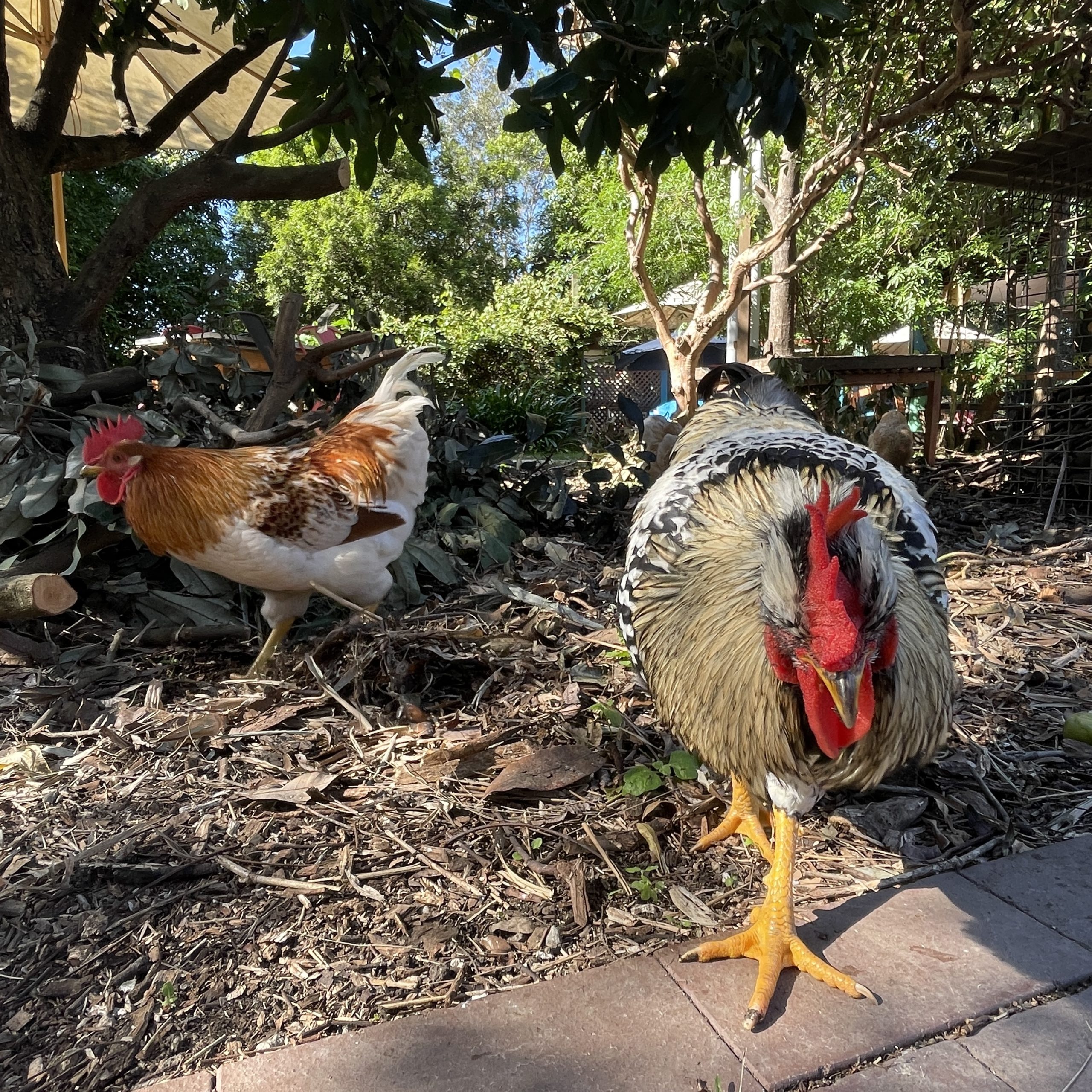
Chickens: we have over ten chickens integrated into our system, which produce eggs, manure to improve the soil and lots of entertainment!
Black soldier flies: in the warmer months we have a black soldier fly farm operating to process waste and produce protein for our chickens to eat.
Worms: we have a couple of worm farms which we use to process waste and produce wonderful castings to improve our soil.
Wildlife: Our inner-city site provides habitat for a surprising number of mammals, birds, reptiles and invertebrates. As an example, over 50 species of birds have been identified around the farm. In the bush regeneration site adjacent to the farm, we focus on providing habitat for native species. Our plants provide food for three species of flying foxes, which have a colony close by and are important pollinators of native tree species. One of these, the Grey-headed flying-fox, is currently considered to be a vulnerable species in Australia. To see some of the vertebrates and invertebrates at our site, see our I-naturalist page: Observations · iNaturalist


NSCF Supporters

Northey Street City Farm is proudly supported by Brisbane City Council through the Environment Grants program.
get in touch
(07) 3857 8775
info@nscf.org.au
Nursery
(07) 3857 8774
nursery@nscf.org.au
Markets
0491 191 434
markets@nscf.org.au
Connect with us


VISIT US
Office Hours: Tuesday - Thursday 9am-4pm
Market Hours: Sunday 6am-11am
Nursery Hours: Tuesday - Saturday 8:30am-12:30pm, Sunday 7:30am-12pm. Closed Mondays and Public Holidays.